Nikolaï Andreïevitch Rimski-Korsakov) Russie - mort le 21 juin 1908, à Lyubensk), est un compositeur et théoricien russe, l'un des membres du Groupe des Cinq (regroupé autour de Mili Balakirev, chef spirituel du groupe, César Cui, Alexandre Borodine, Modeste Moussorgski, appelé puissant petit groupe en Russie).
Il devint inspecteur des orchestres militaires de la marine. Son traité Éléments d'orchestration a été publié en 1913. Il se permettra à plusieurs reprises de revoir, c'est-à-dire de modifier, certaines partitions inachevées de Moussorgski ou de Borodine selon ses théories de composition. Il en reçut des étiquettes peu flatteuses comme celle d'académique. Cela serait oublier un peu vite ses grandes qualités d'orchestrateur et de symphoniste.
Il meurt d'une crise d'angine de poitrine, peu de temps après une ultime rencontre avec Igor Stravinsky. Ses ?uvres les plus connues du grand public restent son vol du bourdon (extrait de son opéra "Les contes du Tsar Saltan") et Shéhérazade. (Rétracter)...(Lire la suite)
Mainly known for his symphonic works, especially the popular symphonic suite Sheherazade, as well as the Capriccio Espagnol and the Russian Easter Fes...
Mainly known for his symphonic works, especially the popular symphonic suite Sheherazade, as well as the Capriccio Espagnol and the Russian Easter Festival Overture, Rimsky-Korsakov left an oeuvre that also included operas, chamber works, and songs. Rimsky-Korsakov's music is accessible and engaging owing to his talent for tone-coloring and brilliant orchestration. Furthermore, his operas are masterful musical evocations of myths and legends.
Born in 1844, Nikolai Rimsky-Korsakov studied the piano as a child but chose a naval career, entering the College of Naval Cadets in St. Petersburg in 1856. However, he continued with piano lessons; in fact, in 1859, Rimsky-Korsakov started working with the French pianist Theodore Canille, through whom he met Balakirev, an important mentor and friend.
As inspector of the Russian Navy's bands during the 1870s, Rimsky-Korsakov was inspired to teach himself the rudiments of the brass and woodwind instruments. By his own account, he was an execrable player, but he did gain a sufficiently thorough understanding of the instruments to write three concertos for solo brass or woodwind and wind orchestra. He did it in part, he wrote, "to teach myself to handle a style of virtuosity till then unknown to me with solos, cadenzas, tuttis, etc." The last of these three works was the clarinet concerto. In rehearsal with the Kronstadt naval band, he decided the accompaniment was too heavy, so he withdrew the piece, and it was never performed in his lifetime. A tiny concerto at only about seven minutes long, the work nevertheless falls into the standard three movements, played without interruption. The Allegro moderato employs folk-like themes, but these sing out only in the dark-hued band accompaniment with the soloist's part twirling, spinning, and taking wide leaps no Russian folksinger would attempt. The Andante begins with a fragmentary cadenza based on the first movement's main theme, then proceeds with a lyrical tune over a gently oom-pah accompaniment; the movement would fit naturally into any ballet of the period. The finale, Allegro moderato, emerges from another, slightly more extended cadenza and revisits material from the first movement, now cast as a lilting waltz.
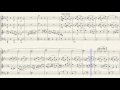
Although this piece was originally written for Bb Clarinet & Wind Orchestra, I created this arrangement for Woodwind Quartet (Flute, Oboe, Bb Clarinet & Bassoon).



 STUDIO
 SONO
SONO ACCESSOIRES
 CABLES
 EFFET
EFFET FLIGHTCASE & ETUIS
 LOGICIELS
 VIDEO
VIDEO LUMIERE
 DEEJAY
 MICROPHONE
 GUITARE
 CLAVIER
 PERCUSSION
 CUIVRE / VENT
 CORDES/TRAD.
 NOËL
NOËL