Camille Saint-Saëns (9 octobre 1835 à Paris - 16 décembre 1921 à Alger) était un compositeur français de l'époque romantique. Dès son enfance il se révèle être un virtuose : il donne son premier concert à onze ans et fait sensation avec un concerto de Wolfgang Amadeus Mozart. Il entre au Conservatoire à 13 ans. À l'âge de 18 ans, il est nommé organiste de l'église Saint-Merry, à Paris. Il acquiert très vite une très bonne réputation et suscite l'admiration de musiciens tels Hector Berlioz et Franz Liszt, qui le décrit comme le « premier organiste du monde ». À l'initiative de ce dernier, il créera son opéra Samson et Dalila à Weimar. Il commence alors sa carrière officielle, au cours de laquelle il abordera la plupart des grandes formes musicales, avec un classicisme que certains qualifieront, assez injustement, d'académique (surtout en France). Son oeuvre se révèle souvent remarquable, claire et d'une grande qualité d'écriture. Pianiste virtuose, il écrira près de 30 ?uvres pour piano dont cinq concertos pour cet instrument. (Rétracter)...(Lire la suite)
"The Carnival of the Animals" is a musical suite of fourteen movements by the French Romantic composer Camille Saint-Saëns.
It was composed ...
"The Carnival of the Animals" is a musical suite of fourteen movements by the French Romantic composer Camille Saint-Saëns.
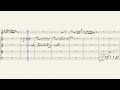
It was composed in February 1886 while Saint-Saëns was vacationing in a small Austrian village. It was originally scored for a chamber group of flute/piccolo, clarinet (B flat and C), two pianos, glass harmonica, xylophone, two violins, viola, cello and double bass, but is usually performed today with a full orchestra of strings, and with a glockenspiel substituting for the rare glass harmonica. The term for this rare 11-piece musical ensemble is a "hendectet" or an "undectet."
Saint-Saëns, apparently concerned that the piece was too frivolous and likely to harm his reputation as a serious composer, suppressed performances of it and only allowed one movement, Le cygne, to be published in his lifetime. Only small private performances were given for close friends like Franz Liszt.
Saint-Saëns did, however, include a provision which allowed the suite to be published after his death. It was first performed on 26 February 1922, and it has since become one of his most popular works. It is a favorite of music teachers and young children, along with Prokofiev's Peter and the Wolf and Britten's The Young Person's Guide to the Orchestra. In fact, it is very common to see any combination of these three works together on modern CD recordings.
Movement 2. Poules et coqs (Hens and Roosters)
Strings without cello and double-bass, two pianos, with clarinet: This movement is centered around a pecking theme played in the pianos and strings, which is quite reminiscent of chickens pecking at grain. The clarinet plays small solos above the rest of the players at intervals. The piano plays a theme based on the crowing of a rooster's Cock a Doodle Doo.



 STUDIO
 SONO
SONO ACCESSOIRES
 CABLES
 EFFET
EFFET FLIGHTCASE & ETUIS
 LOGICIELS
 VIDEO
VIDEO LUMIERE
 DEEJAY
 MICROPHONE
 GUITARE
 CLAVIER
 PERCUSSION
 CUIVRE / VENT
 CORDES/TRAD.
 NOËL
NOËL