Franz Liszt (Liszt Ferenc en hongrois) est un compositeur, transcripteur et pianiste virtuose austro-hongrois, né à Doborján1 (Autriche) le 22 octobre 1811 et mort à Bayreuth (Allemagne) le 31 juillet 1886.
Liszt est le père de la technique pianistique moderne et du récital. Avec lui naissent l’impressionnisme au piano, le piano orchestral — Mazeppa, la quatrième Étude d'exécution transcendante — et le piano littéraire — les Années de pèlerinage. Innovateur et promoteur de l'« œuvre d'art de l'avenir » (la « musique de l'avenir » étant une invention des journalistes de l'époque) Liszt influença et soutint plusieurs figures majeures du XIXe siècle musical : Richard Wagner, Hector Berlioz, Camille Saint-Saëns, Bedrich Smetana, Edvard Grieg et Alexandre Borodine. Aussi féconde que diverse, son œuvre a inspiré plusieurs courants majeurs de la musique moderne, qu'il s'agisse de l'impressionnisme, de la renaissance du folklore, de la musique de film ou du dodécaphonisme sériel. (Rétracter)...(Lire la suite)
Franz Liszt was a 19th-century Hungarian composer, pianist, conductor, and teacher. Liszt became renowned throughout Europe during the nineteenth cent...
Franz Liszt was a 19th-century Hungarian composer, pianist, conductor, and teacher. Liszt became renowned throughout Europe during the nineteenth century for his virtuosic skill as a pianist. He was said by his contemporaries to have been the most technically advanced pianist of his age and perhaps the greatest pianist of all time. He was also a well-known composer, piano teacher, and conductor who contributed significantly to the modern development of the art. He was a benefactor to other composers, including Richard Wagner, Hector Berlioz, Camille Saint-Saëns, Edvard Grieg and Alexander Borodin. As a composer, Liszt was one of the most prominent representatives of the "Neudeutsche Schule" ("New German School"). He left behind an extensive and diverse body of work in which he influenced his forward-looking contemporaries and anticipated some 20th-century ideas and trends. Some of his most notable contributions were the invention of the symphonic poem, developing the concept of thematic transformation as part of his experiments in musical form and making radical departures in harmony.
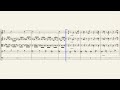
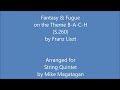
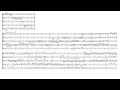
Fantasie und Fuge über das Thema B-A-C-H (also in the first version known as Präludium und Fuge über das Motiv B-A-C-H, title in English: Fantasy and Fugue on the Theme B-A-C-H) (S.260i/ii [1st/2nd version], S.529i/ii [piano arrangement of 1st/2nd version]) is an organ fantasy on the BACH motif composed by Franz Liszt in 1855, later revised in 1870.
Both versions were transcribed for solo piano by the composer. The piece was dedicated to Alexander Winterberger (who also played it on the premiere, 13 May 1856) and published by Breitkopf & Härtel in 1856. It is, along with the Fantasy and Fugue on the chorale Ad nos, ad salutarem undam, one of Liszt's most famous organ works. It was composed for the consecration of the Ladegast organ in the Merseburg Cathedral. The piece is a recurring piece in the organ repertory and is frequently performed.
Although originally composed for Pipe Organ, I created this interpretation for String Quintet (2 Violins, Viola, Cello and Bass).



 STUDIO
 SONO
SONO ACCESSOIRES
 CABLES
 EFFET
EFFET FLIGHTCASE & ETUIS
 LOGICIELS
 VIDEO
VIDEO LUMIERE
 DEEJAY
 MICROPHONE
 GUITARE
 CLAVIER
 PERCUSSION
 CUIVRE / VENT
 CORDES/TRAD.
 NOËL
NOËL