Georg Friedrich Haendel ou Händel (George Frideric Handel en anglais, comme il l'écrivait lui-même) est un compositeur d'origine allemande, naturalisé britannique, né le 23 février 1685 à Halle et mort le 14 avril 1759 à Londres.
Haendel personnifie, au côté de Bach, l'apogée de la musique baroque. Né et formé en Saxe, installé quelques mois à Hambourg avant un séjour initiatique et itinérant de trois ans en Italie, revenu brièvement à Hanovre avant de s'établir définitivement en Angleterre, il réalisa dans son ?uvre une synthèse magistrale des traditions musicales de l'Allemagne, de l'Italie, de la France et de l'Angleterre,
Virtuose hors pair à l'orgue et au clavecin, Haendel dut à quelques ?uvres très connues (notamment l'oratorio Le Messie, ses concertos pour orgue et concertos grossos, ses suites pour le clavecin, ses musiques de plein air : Water Music et Musique pour les feux d'artifice royaux) de conserver une notoriété active pendant tout le XIXe siècle, période d'oubli pour la plupart de ses contemporains. Cependant, pendant plus de trente-cinq ans, il se consacra pour l'essentiel à l'opéra en italien (plus de 40 partitions d'opera seria, avant d'inventer et promouvoir l'oratorio en anglais dont il est un des maîtres incontestés.
Son nom peut se trouver sous plusieurs graphies : en allemand, Händel peut (en transcription du umlaut) aussi s'écrire Haendel (orthographe souvent préférée en français) et, après son installation en Angleterre, lui-même l'écrivait sans tréma : Handel, qui est la manière retenue par les anglophones. (Rétracter)...(Lire la suite)
Messiah (HWV 56) is an English-language oratorio composed in 1741 by George Frideric Handel, with a scriptural text compiled by Charles Jennens from t...
Messiah (HWV 56) is an English-language oratorio composed in 1741 by George Frideric Handel, with a scriptural text compiled by Charles Jennens from the King James Bible, and from the version of the Psalms included with the Book of Common Prayer. It was first performed in Dublin on 13 April 1742 and received its London premiere nearly a year later. After an initially modest public reception, the oratorio gained in popularity, eventually becoming one of the best-known and most frequently performed choral works in Western music.
Handel's reputation in England, where he had lived since 1712, had been established through his compositions of Italian opera. He turned to English oratorio in the 1730s in response to changes in public taste; Messiah was his sixth work in this genre. Although its structure resembles that of opera, it is not in dramatic form; there are no impersonations of characters and no direct speech. Instead, Jennens's text is an extended reflection on Jesus Christ as Messiah. The text begins in Part I with prophecies by Isaiah and others, and moves to the annunciation to the shepherds, the only "scene" taken from the Gospels. In Part II, Handel concentrates on the Passion and ends with the "Hallelujah" chorus. In Part III he covers the resurrection of the dead and Christ's glorification in heaven.
Handel wrote Messiah for modest vocal and instrumental forces, with optional settings for many of the individual numbers. In the years after his death, the work was adapted for performance on a much larger scale, with giant orchestras and choirs. In other efforts to update it, its orchestration was revised and amplified by (among others) Mozart. In the late 20th and early 21st centuries the trend has been towards reproducing a greater fidelity to Handel's original intentions, although "big Messiah" productions continue to be mounted. A near-complete version was issued on 78 rpm discs in 1928; since then the work has been recorded many times.
From the gentle falling melody assigned to the opening words ("Comfort ye") to the sheer ebullience of the "Hallelujah" chorus and the ornate celebratory counterpoint that supports the closing "Amen", hardly a line of text goes by that Handel does not amplify".
The "Amen" begins again simply in the bass and continuo. An intricate melody rises in four measures and one octave. Every other voice, tenor, alto, soprano, also sings the theme once. Rather unexpectedly, a solo violin plays the theme, first unsupported, then assisted by a continuo entrance of the theme, interrupted by a choral four-part setting with the theme in the bass. After two more instrumental measures, a four part-setting develops to imitation and counterpoint of more and more independent voices, ending on a rest of a full measure. Finally, Amen is repeated two more times, Adagio.
A contemporary critic, conditioned by John Brown who objected to operatic features in oratorios such as recitatives, long ritornellos, and ornamented vocal lines, commented on Handel's display of musical inventiveness and "contrapuntal skill": "The fugue too, on Amen, is entirely absurd, and without reason: at most, Amen is only a devout fiat, and ought never, therefore, to have been frittered, as it is, by endless divisions on A— and afterwards men." But Handel's first biographer, John Mainwaring, wrote in 1760 that this conclusion revealed the composer "rising still higher" than in "that vast effort of genius, the Hallelujah chorus". Christopher Hogwood comments: "the entry of the trumpets marks the final storming of heaven". Daniel I. Block summarized in 1997: "... in this piece we see the remarkable confluence of Hebrew theology and biblical truth, Italian operatic genius, English class, and German piety".
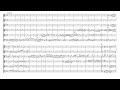
Although originally written for Vocal soloists (2 sopranos, alto, tenor, bass), Chorus, Orchestra and Harpsichord, I created this arrangement for 2 Oboes & Strings (2 Violins, Viola & Cello).



 STUDIO
 SONO
SONO ACCESSOIRES
 CABLES
 EFFET
EFFET FLIGHTCASE & ETUIS
 LOGICIELS
 VIDEO
VIDEO LUMIERE
 DEEJAY
 MICROPHONE
 GUITARE
 CLAVIER
 PERCUSSION
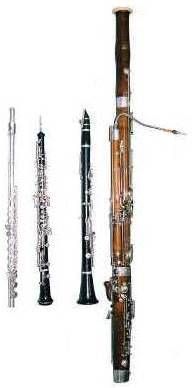
 CUIVRE / VENT
 CORDES/TRAD.
 NOËL
NOËL