Johann Sebastian Bach (21 mars 1685 - 28 juillet 1750), en français Jean-Sébastien Bach, est un compositeur, claveciniste, violoniste et organiste allemand.
Compositeur de l'époque baroque dont il symbolise et personnifie l'apogée, il eut une influence majeure et durable dans le développement de la musique occidentale ; de grands compositeurs, tels que Mozart et Beethoven, reconnurent en lui un maître du contrepoint insurpassable.
Il fut un musicien complet qui maîtrisait la facture des instruments tout autant que la technique instrumentale, la composition comme l'improvisation, la pédagogie comme la gestion d'une institution musicale.
Localement connu de son vivant comme organiste et improvisateur, sa musique fut toutefois vite oubliée après son décès, car passée de mode ; son ?uvre, à de rares exceptions près, manuscrite et jamais publiée, dispersée et en partie perdue, fut redécouverte et étudiée par les romantiques. (Rétracter)...(Lire la suite)
Unser Mund sei voll Lachens (May our mouths be full of laughter), BWV 110, is a church cantata by Johann Sebastian Bach. He composed the Christmas can...
Unser Mund sei voll Lachens (May our mouths be full of laughter), BWV 110, is a church cantata by Johann Sebastian Bach. He composed the Christmas cantata in Leipzig for Christmas Day and first performed it on 25 December 1725.
The cantata was composed in Leipzig as a choral work celebrating Christmas Day. This piece is based on Psalm 126, Jeremiah 10, and the second chapter of Luke.
The opening chorus is "May our mouth be full of laughter and our tongues full of praise", which is an adaptation of the Bach's Overture in D major, BWV 1069. The soprano/tenor duet "Ehre sei Gott in der Höhe" is a version of Bach's Magnificat. The cantata begins with its most powerful section, the opening chorus, which calls for all instruments to be performing besides bassoon. The text concludes with acknowledgement that the Lord has achieved great things for his people.
A tenor aria includes two intertwining flutes as the soloist describes soaring thoughts and senses, prompted by the thought that God-become-man intends that his people be "Himmels Kinder", (heaven's children). A bass recitative (You, Lord, are unlike any other) is followed by an alto aria (Ach Herr, was ist ein Menschenkind) accompanied by oboe d'amore that expresses wonder about the nature of man that the Lord should seek to redeem him through such painful action.
The two voices shine over a simple organ and continuo accompaniment as they offer to God glory in the highest as peace on Earth is awaited because the child has come as a sign of favor.
The closing chorale is related to the third section of the composer's Christmas Oratorio: "Alleluia! All praise be given God from the bottom of our hearts."
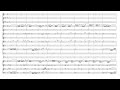
Although originally written for soprano, alto, tenor, and bass soloists, four-part chorus, three trumpets, three oboes, oboe d'amore, oboe da caccia, two transverse flutes, bassoon, two violins, viola, timpani, and continuo, I created this arrangement for Small Orchestra (Piccolo Trumpet in A, Bb Trumpet, Flugelhorn, Timpani, 2 Concert (Pedal) Harps and Strings (4 Violins, 2 Violas & 2 Cellos).



 STUDIO
 SONO
SONO ACCESSOIRES
 CABLES
 EFFET
EFFET FLIGHTCASE & ETUIS
 LOGICIELS
 VIDEO
VIDEO LUMIERE
 DEEJAY
 MICROPHONE
 GUITARE
 CLAVIER
 PERCUSSION
 CUIVRE / VENT
 CORDES/TRAD.
 NOËL
NOËL