Johann Sebastian Bach (21 mars 1685 - 28 juillet 1750), en français Jean-Sébastien Bach, est un compositeur, claveciniste, violoniste et organiste allemand.
Compositeur de l'époque baroque dont il symbolise et personnifie l'apogée, il eut une influence majeure et durable dans le développement de la musique occidentale ; de grands compositeurs, tels que Mozart et Beethoven, reconnurent en lui un maître du contrepoint insurpassable.
Il fut un musicien complet qui maîtrisait la facture des instruments tout autant que la technique instrumentale, la composition comme l'improvisation, la pédagogie comme la gestion d'une institution musicale.
Localement connu de son vivant comme organiste et improvisateur, sa musique fut toutefois vite oubliée après son décès, car passée de mode ; son ?uvre, à de rares exceptions près, manuscrite et jamais publiée, dispersée et en partie perdue, fut redécouverte et étudiée par les romantiques. (Rétracter)...(Lire la suite)
Zerreißet, zersprenget, zertrümmert die Gruft (Destroy, burst, shatter the tomb), BWV 205[a] is a secular cantata by Johann Sebastian Bach.
...
Zerreißet, zersprenget, zertrümmert die Gruft (Destroy, burst, shatter the tomb), BWV 205[a] is a secular cantata by Johann Sebastian Bach.
The cantata was commissioned by the students of Leipzig University for the popular professor August Friedrich Müller and premiered on his name day on 3 August 1725 as a dramma per musica under the title Der zufriedengestellte Aeolus (The contented Aeolus).
Its libretto was written by Christian Friedrich Henrici and begins with Pallas Athene (sung by a soprano) setting up a celebration in honour of Müller. However, she fears that Aeolus (bass) could ruin the celebrations with heavy storms in August. With the help of Zephyrus (tenor) the god of mild winds and Pomona the goddess of fruitfulness (alto), Pallas manages to appease Aeolus and those present grant a vivat in unison for the professor.
Bach wrote other works for university occasions: the cantata is one of twelve surviving Festmusiken zu Leipziger Universitätsfeiern, that is music for festivals of Leipzig University
The cantata is scored for four solo voices – Pallas as soprano, Pomona as alto, Zephyrus as tenor, and Aeolus as bass – a four-part choir, three trumpets, timpani, two horns, two flutes, two oboes, oboe d'amore, two violins, viola, viola d'amore, viola da gamba, and basso continuo.
Source: Wikipedia (https://en.wikipedia.org/wiki/Zerrei%C3%9Fet,_zersprenget,_zertr%C3%BCmm...).
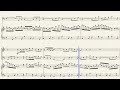
I created this arrangement of the fourth Aria: "Angenehmer Zephyrus" (Charming Zephyr) for Flute, Cello & Concert (Pedal) Harp.



 STUDIO
 SONO
SONO ACCESSOIRES
 CABLES
 EFFET
EFFET FLIGHTCASE & ETUIS
 LOGICIELS
 VIDEO
VIDEO LUMIERE
 DEEJAY
 MICROPHONE
 GUITARE
 CLAVIER
 PERCUSSION
 CUIVRE / VENT
 CORDES/TRAD.
 NOËL
NOËL