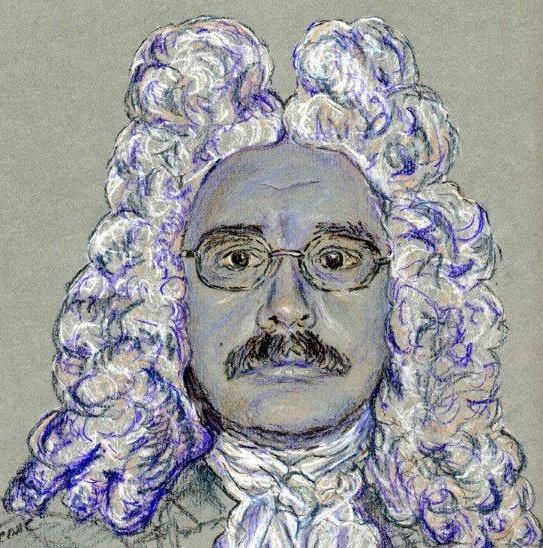
Johann Sebastian Bach (21 mars 1685 - 28 juillet 1750), en français Jean-Sébastien Bach, est un compositeur, claveciniste, violoniste et organiste allemand.
Compositeur de l'époque baroque dont il symbolise et personnifie l'apogée, il eut une influence majeure et durable dans le développement de la musique occidentale ; de grands compositeurs, tels que Mozart et Beethoven, reconnurent en lui un maître du contrepoint insurpassable.
Il fut un musicien complet qui maîtrisait la facture des instruments tout autant que la technique instrumentale, la composition comme l'improvisation, la pédagogie comme la gestion d'une institution musicale.
Localement connu de son vivant comme organiste et improvisateur, sa musique fut toutefois vite oubliée après son décès, car passée de mode ; son ?uvre, à de rares exceptions près, manuscrite et jamais publiée, dispersée et en partie perdue, fut redécouverte et étudiée par les romantiques. (Rétracter)...(Lire la suite)
Unique among Bach's works -- assuming it is by Bach -- this is a fugue in jig-time, the sort of thing one finds in Buxtehude and Pachelbel, but at a l...
Unique among Bach's works -- assuming it is by Bach -- this is a fugue in jig-time, the sort of thing one finds in Buxtehude and Pachelbel, but at a lower skill level. It begins, innocently enough, with a cheerful tune in dotted Gigue rhythm, but quickly proves to be a treacherous test of virtuosity with its rapid, four-voice writing and its especially difficult pedal part. The fugue works well if played in a low-key manner, but some performers feel that if they're going to take the trouble to master this three-minute piece, they should impress the audience with its difficulty, so with a combination of showy registration choices and fast tempo, this can also be used as a barn-burner.



 STUDIO
 SONO
SONO ACCESSOIRES
 CABLES
 EFFET
EFFET FLIGHTCASE & ETUIS
 LOGICIELS
 VIDEO
VIDEO LUMIERE
 DEEJAY
 MICROPHONE
 GUITARE
 CLAVIER
 PERCUSSION
 CUIVRE / VENT
 CORDES/TRAD.
 NOËL
NOËL


 : Guitar 3 (muted)