Instrument : organ Nombre de Pages : 62 This School of Organ Playing presuppose...(+)
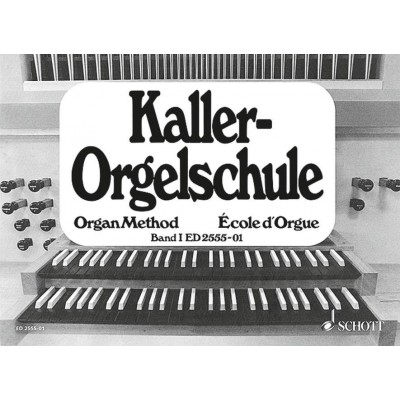
Instrument : organ Nombre de Pages : 62 This School of Organ Playing presupposes a certain technical facility on the piano. The pedal exercises at the beginning are rudimentary and should be practiced in all keys, gradually accelerating the tempo. The studies are graded according to their polyphony, beginning with simple two part exercises, followed by those in three and more parts. This acquaintance with the strict principles of polyphonic music, and the introduction to effective part writing, with a knowledge of harmonic form and architectonic values, provide the essential background for the correct performance of polyphonic music, especialle the fugue. The most important musical forms have been used to illustrate the various possibilites of registration and its relationship to style (colourful, individualistic and smooth playing). The studies are so arranged that earlier technical points, etc. are constantly reviewed, through comparison of style and form, in order to fix, or refreshen, the ideas in the student's mind. It is very important that the evolution of organ music from vocal music should be made clear to the student the very beginning, both musically and intellectually. He will be shown the technical evolution of organ music during the centuries and thus prepared for an artistic execution and interpretation of old and new words, especially for the incomparable art of our great Johann Sebastian Bach. Content : Grundlagen des Pedalspiels - T.L. da Vittoria: Bicinium: Bonum erat - A. Zoilo: Bicinium: Quare fremuerunt - Melius illi - W. Dietrich: Übung in e-Moll - G.P. Telemann: Largo - J.K.F. Fischer: Übung d-Moll - G.P. Telemann: Kanon - J. Pachelbel: Magnificat peregrini toni Meine Seele erhebt den Herrn - T.L. da Vittoria: Accedentes principes - J.K.F. Fischer: Übung in g-Moll - W. Dietrich: Pedalübung - S. Scheidt: Vater unser im Himmelreich VI. Versus Choralis in Basi - H.L. Haßler: Crucifixus - J.K.F. Fischer: Praeludium D-Dur - J. Pachelbel: Übung in a-Moll - W. Dietrich: Übung in As-Dur - R. Schwarz-Schilling: Kanon a 2 - Kanon a 3 - G. Aichinger: Stabat mater - J. Pachelbel: Durch Adams Fall ist ganz verderbt - J.K.F. Fischer: Praeludium fis-Moll - H.L. Haßler: Benedictus - J. Pachelbel: Was mein Gott will, das gescheh' allzeit - T.L.da Vittoria: Exclamans Jesus - S.Scheidt: Warum betrübst du dich, mein Herz IX. Versus. Choralis in Basso - D. Zipoli: Pastorale - J. Pachelbel: Vom Himmel hoch - J.S. Bach: Pedal-Exercitium - J.K.F. Fischer: Fuga g-Moll - J. Pachelbel: Komm, Gott Schöpfer, heiliger Geist - J.K.F. Fischer: Praeludium und Fuga cis-Moll - W. Dietrich: Pedalsolo - Übungen für mehrstimmiges Spiel in einer Hand: J.K.F. Fischer: Praeludium und Fuga e-Moll - H.L. Haßler: Da Jesus an dem Kreuze stund - M. Praetorius: Es ist ein Ros entsprungen - S. Scheidt: Vom Himmel hoch - M. Praetorius: Nun bitten wir den heiligen Geist - B. Resinarius: Nun bitten wir den heiligen Geist - S. Scheidt: Psalmus: Da Jesus an dem Kreuze stund - J.K.F. Fischer: Praeludium und Fuga h-Moll - J.S. Bach: Vom Himmel hoch - O Welt ich muß dich lassen - Herzlich tut mich verlangen - D. Buxtehude: Ach Herr, ich armen Sünder - J.S. Bach: Trio c-Moll - W. Dietrich: Pedalsolo/Trillerübung - J.S. Bach: Allein Gott in der Höh' sei Ehr' - J.K.F. Fischer: Praeludium und Fuga e-Moll - J.L. Krebs: Trio für 2 Manuale und Pedal
Debussy's Première Rhapsodie is one of two concertante works completed, premier...(+)
Debussy's Première Rhapsodie is one of two concertante works completed, premiered and published during his lifetime. He was commissioned to write it in 1909 for the final examination at the Paris Conservatoire in 1910. Debussy orchestrated it in the summer of 1911. While transferring the clarinet part from the already published version for clarinet and piano, he made a few subtle changes, particularly in m. 201, which has been a bone of contention among clarinettists for over a century. The present scholarly-critical publication is the first Urtext edition of the orchestral version. It draws on every known source and takes into account a previously ignored source that sheds new light on the piece. - First Urtext edition of the orchestral version - First scholarly-critical edition of a pioneering work for clarinet - Trilingual Foreword (Eng/Fr/Ger) with Critical Commentary (Eng) / Clarinette Et Orchestre
Debussy's Première Rhapsodie is one of two concertante works completed, premier...(+)
Debussy's Première Rhapsodie is one of two concertante works completed, premiered and published during his lifetime. He was commissioned to write it in 1909 for the final examination at the Paris Conservatoire in 1910. Debussy orchestrated it in the summer of 1911. While transferring the clarinet part from the already published version for clarinet and piano, he made a few subtle changes, particularly in m. 201, which has been a bone of contention among clarinettists for over a century. The present scholarly-critical publication is the first Urtext edition of the orchestral version. It draws on every known source and takes into account a previously ignored source that sheds new light on the piece. - First Urtext edition of the orchestral version - First scholarly-critical edition of a pioneering work for clarinet - Trilingual Foreword (Eng/Fr/Ger) with Critical Commentary (Eng) / Clarinette Et Piano
The Featured Pianist Piano solo[Sheet music + CD] - Intermediate/advanced Chester Music
The Featured Pianist is a splendid collection of fourteen classical favourites f...(+)
The Featured Pianist is a splendid collection of fourteen classical favourites for the intermediate to advancing pianist, providing a superb enrichment to their repertoire. Suitable for Grades 5-6, the book also comes with a CD and additional downloadable content.The book itself contains fourteen fantastic pieces that everybody is sure to know and love by the cream of classical composers. With Debussy's masterpieces Clair de Lune and Arabesque #1, the latter of which is a beautiful score merely to look at, let alone play. A couple of classic Beethoven pieces, Adagio Cantabile and Adagio Sostenuto, are included, as well as timeless compositions by Chopin, Schubert and Bach that are essential learning for any pianist worth their salt.The accompanying CD contains professional performances of each piece and includes free hints and tips which are downloadable to your computer. Either play along to the CD, or simply unwind and relax to this unbeatable compilation of inspirational performances. Other pieces include Solfeggietto by C. P. E. Bach and Sweet Remembrance by Mendelssohn, among many others that will undeniably delight any listeners within earshot. The pieces arranged in this book are between Grades 5 and 6 in standard, making them perfect for those who want to expand their repertoire and musical knowledge with some of the finest compositions of all time. The Featured Pianist, with its brilliant engravings, accompanying CD and downloadable content, is everything you'll need to learn these great pieces of music. / Piano
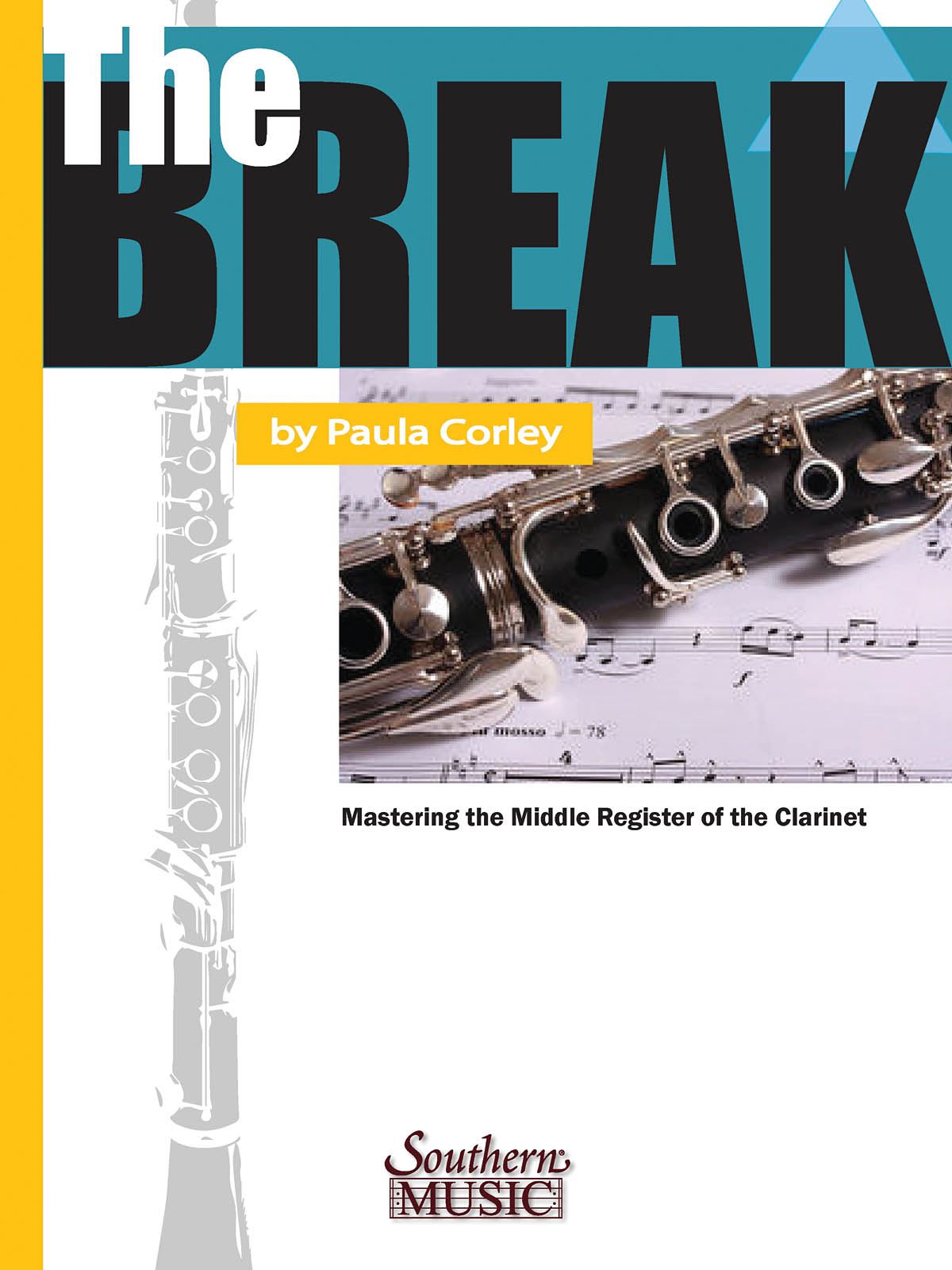
Mastering the Middle Register of the Clarinet. Crossing the break can be a sourc...(+)
Mastering the Middle Register of the Clarinet. Crossing the break can be a source of frustration for developing clarinetists. The Break is a logical guide for mastering this important step in clarinet performance. The method is divided into two parts: Part I contents: the clarinet overtone series - how new note names attach to previously learned fingerings - how to incorporate 'right hand down' as a developmental technique - one octave scales across the break - first melodies in the clarion register that teach basic musical concepts needed for advanced performance. Part II contents: studies from Rhythmical Articulation by Pasquale Bona, selected and edited for clarinet to prepare students for upper level performance.Rhythmical Articulation was originally written to assist singers with rhythmical and pitch accuracy. Range: The range is appropriate for developing clarinetists (low B to B just above the treble staff). Third-line B natural is often referred to as the break because it is the note where the register key is added to produce the middle register. These studies and exercises center around third-line B natural and provide a means to develop smooth connections between the lower and middle registers of the clarinet. Technique: The studies have been adapted for clarinet to cover nine key signatures. Appropriate articulations, dynamics, and expressive markings have been added to reflect common practice in the classical style. Advanced rhythms and time signatures are introduced with moderate tempos. Musical terms have been added to identify phrases and suggest expression. The Break also includes an introduction to the altissimo register. / Niveau : 2 / Etudes et exercices / Méthode / Clarinette
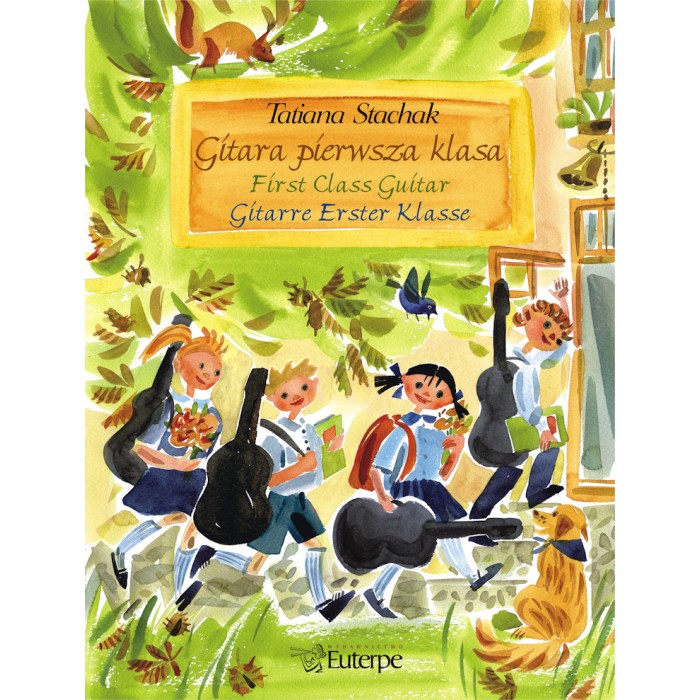
Classical Guitar Handbook For The Young. Par STACHAK TATIANA. The handbook is de...(+)
Classical Guitar Handbook For The Young. Par STACHAK TATIANA. The handbook is designed for the youngest guitar players - children of the age from 6 to 9, beginning to play guitar. It is divided in four parts: the first concerns playing on open strings, second includes first exercises and melodies played with the left hand, third is a collection of simple two part compositions and the works included in the fourth recapitulate the material.
The handbook\'s contents is characterised by gradual increase in the level of difficulty and a wide range of choice of compositions and exercises in particular technical problems, which facilitates the process of learning. Modern approach to guitar teaching methods adopted in the handbook is visible in the introduction in the first stage of learning of duo playing by the student with the teacher. The attractiveness of this method allows develop technical skills as well as sensibility and musicality from the beginning of the learning process. The introduction of the elements of improvisation to exercises is an interesting idea developed in this handbook.
The graphic design with coloured illustrations was arranged with the smallest details in mind. To make the reading easier for children, the notes were printed in large fonts and coloured frames and signs pointing to certain problems facilitate orientation in the handbook material./ Méthode / Guitare
for solo cello. Par LARCHER THOMAS. I do not compose my pieces for a certain voi...(+)
for solo cello. Par LARCHER THOMAS. I do not compose my pieces for a certain voice range or orchestration, but for musicians, for people.
It is almost impossible for me to produce a piece without having a particular person in mind or to hear him/her inwardly.
No matter how standardized the interpretation of classical music is, and no matter how many coordinates have been fixed and defined, I do not want to have them seen (and therewith the notation) as determining and limiting signs, but rather as guideposts towards the creation of vital, organic music. In differentiated music, two participants are necessary in order for a piece to evolve-- the composer and the musician.
Just as there is no one way for a composer to express himself or to notate music, etc., neither is there one way for a musician to read the notation, to interpret, or to live. We find ourselves, for this reason, in a network of meanings, gestures, and signs which have to be fathomed and expanded together.
The tone, the breath, the gestures, the dedication, and the potentialities of a musician were also ultimately decisive for the form of this piece. It is music which pushes the expressive and technical possibilities of the instrument to its very limits. It is music in which the musician has to transport the contexts and expression over and above the notation.
It was not necessary for me to find a new form for this piece; it is a work which can and should be performed in a ‘normal’ concert situation. I deliberately wanted to integrate the perhaps new and unusual content into a familiar form (thus the title ‘Sonata’) And I also wanted to embed the aforementioned extreme situations (in which the technical extremes are synonyms for tension, isolation, loss or tenderness) in an organic process in order for the listener to be able to empathize with and comprehend what is expressed in the piece.
I would like to thank Natalie Clein, to whom the Sonata is dedicated, for inspiring this piece and for the path that led to the realization of the music.
Thomas Larcher/ Répertoire / Violoncelle
This volume devised by Martin Weyer contains organ music of easy to medium techn...(+)
This volume devised by Martin Weyer contains organ music of easy to medium technical difficulty for use at communion. The broad range of styles encompasses Johann Sebastian Bach and early Classical works through to the late Romantic period. The album contains original compositions and first publications as well as arrangements for organ and twelve pieces for communion in settings by Johann Sebastian Bach with melodies and texts appropriate to communion. Some of the pieces can also be performed with solo instruments (in C, Bb or F). Corresponding instrumental parts are included with the score.- Organ music of easy to medium technical difficulty for use at communion - Broad range of styles - Includes first publications- Original compositions and arrangements for organ, some which can be performed with solo instruments Contents:Johann Sebastian Bach: Jesu, meine Freude BWV 227 and 1105 / Adagio in D minor BWV 593 / Nun danket alle Gott (from Cantata BWV 79) / Sonatina BWV 106 / Sarabande in D minor BWV 812 / Herzlich lieb hab ich dich, o Herr BWV 1115 / Agnus Dei (from the Mass in B minor BWV 232) / Air BWV 1068 / Sicilienne in G minor BWV 1031 / Twelve selected pieces in settings by Johann Sebastian Bach / Works by Johann Adolf Hasse, Friedrich Wilhelm Marpurg (three chorale preludes), Georg Michael Telemann (two chorale preludes), Johann Christian Heinrich Rinck (Nun danket alle Gott), Joseph Gustav Merkel, Gabriel Rheinberger (Fugue in C major from the 'Skizzen'), Heinrich von Herzogenberg, Arnold Mendelssohn, Otto Besch (Praeludium- first publication), Wilhelm Wapenhensch (Variations on 'Befiehl du deine Wege'- first publication) / Orgue
Par DUTILLEUX HENRI. Composed in 1978 by Henri Dutilleux, Timbres, Espace, Mouve...(+)
Par DUTILLEUX HENRI. Composed in 1978 by Henri Dutilleux, Timbres, Espace, Mouvement Ou La Nuit Etoileé is a work for Orchestra, also named “The Starry Night” after the painting by Van Gogh. It was commissioned by Mstislav Rostropovich for the National Symphony Orchestraof Washington and is dedicated to Charles Münch. This work for Orchestra lasts approximately 20 minutes and depicts the content of the painting. It is scored for a full Orchestra without Violins or Violas. The Cellos serve to represent space, with swirling solos alongside calmer sections, while thelack of Violins and Violas epitomises for the quiet and motionless sections of the painting. The solo of the Wind instruments and Drums characterizes the clouds and the light of the moon and stars. It is divided into two parts: 1. Nébuleuse (Nebula) and 2. Constellations, which are divided by a Cello interlude. Composed in 1978 by Henri Dutilleux, Timbres, Espace, Mouvement Ou La Nuit Etoilee is a work for Orchestra, also named ; The Starry Night after the painting by Van Gogh. It was commissioned by Mstislav Rostropovich for the National Symphony Orchestra of Washington and is dedicated to Charles Munch. This work for Orchestra lasts approximately 20 minutes and depicts the content of the painting. It is scored for a full Orchestra without Violins or Violas. The Cellos serve to represent space, with swirling solos alongside calmer sections, while the lack of Violins and Violas epitomises for the quiet andmotionless sections of the painting. The solo of the Wind instruments and Drums characterizes the clouds and the light of the moon and stars. It is divided into two parts: 1. Nebuleuse (Nebula) and 2. Constellations, which are divided by a Cello interlude. Henri Dutilleux was internationally acclaimed for his work, winning prizes such as the Gold Medal of the Royal Philharmonic Society and the UNESCO's International Rostrum of Composers, among many others. His work also includes a Piano sonata, two symphonies, the Violin concerto 'L'Arbre Des Songes' (The Tree Of Dreams) and the Cello concerto 'Tout Un Monde Lointain' (A Whole Distant Word)./ Répertoire / Orchestre
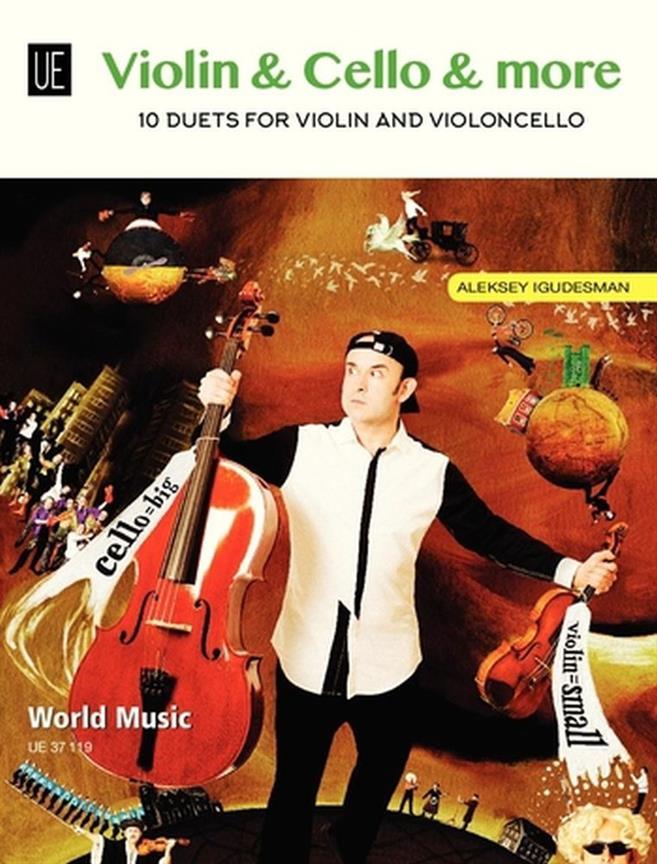
10 Duets. Par DIVERS AUTEURS (ARR.IGUDESMAN ALEKSEY). A violinist and a cellist ...(+)
10 Duets. Par DIVERS AUTEURS (ARR.IGUDESMAN ALEKSEY). A violinist and a cellist having fun together! Whoever heard of such a thing? But that is exactly what Alexey Igudesman has provided for in his 'Violin and Violoncello and More”. He has responded to popular demand and arranged - no, recreated! - duets from his previous publications for two violins. These encompass many different styles but always with Alexsey's own individual and quirky touch.
The contents list reads like a world tour, passing through Scotland, Ireland, Israel, Khazakhstan and many other countries. Igudesman took great care to 'custom make” the cello part as he wanted these arrangements to be as musically valuable as his original versions. He encourages the players to be creative, adding improvisation or even choreography but, above all, to have fun.
These pieces will suit intermediate players who want to be stretched or more advanced students who simply want to let their hair down!/ Répertoire / Violon et Violoncelle
Par SUZUKI SHINICHI. The New International Edition of Suzuki Piano School, Volum...(+)
Par SUZUKI SHINICHI. The New International Edition of Suzuki Piano School, Volume 6, includes French, German and Spanish translations as well as a newly recorded CD performed by internationally renowned recording artist Seizo Azuma. Now the book and CD can be purchased together or separately. The contents have changed to include Mendelssohn's 'Venetian Gondola Song, ' J. S. Bach's 'Invention No. 8, ' Grieg's 'Notturno, ' as well as 'Spanish Dance No. 5, ' by Granados and 'O Polichinelo' by Villa-Lobos. Daquin's 'The Cuckoo' was moved to Book 5. The second and third movements of Mozart's 'Sonata in C Major, ' K. 330, and J. S. Bach's 'Little Prelude' have been permanently removed. Titles:Sonata in C Major (Allegro; Andante; Rondo: Allegretto), K. 545 (W. A. Mozart) * Venetian Gondola Song, from Songs Without Words, Book 2 (Mendelssohn) * Invention No. 8 in F Major, BWV 779, from 15 Two-Part Inventions (J. S. Bach) * Notturno, Op. 54, No. 4 (Grieg) * Sonata in D Minor, K. 9; L. 413 (D. Scarlatti) * Sonata in C Major (Allegro moderato), K. 330, (W. A. Mozart) * Spanish Dance No. 5 (Andaluza), from 12 Spanish Dances (Granados) * O Polichinelo, from A prole do bebê no. 1 (Villa-Lobos) / Méthode / Méthode / Piano
Hardcover, Cloth-Bound. Par LISZT FRANZ. This volume contains Liszt's earliest p...(+)
Hardcover, Cloth-Bound. Par LISZT FRANZ. This volume contains Liszt's earliest pieces written in a Hungarian style. The complete set of Magyar dallok / Ungarische National-Melodien [Hungarian songs] consisting of 11 items is published here for the first time in a scholarly edition. The composer began to write them resulting from his first return visit to Pest in 1839. The music of these pieces was partly re-used by Liszt at the beginning of the 1850s in his deservedly popular 15 Hungarian Rhapsodies. The Carnival at Pest was inspired by his second tour of Hungary in 1846- it was later re-worked as the 9th Hungarian Rhapsody. The present volume also contains the so far unknown very first version of the 1st Hungarian Rhapsody, and in addition two large fragments from the 1840s plus a number of album leaves.
A detailed preface in Hungarian, English, and German, including new research results, numerous manuscript facsimiles, and critical notes, makes this volume of the New Liszt Edition an important publication of immense scholarly value. Along with the cloth-bound Complete Edition, a paperback version for practical use has also been published. This edition's contents are identical to those of the hardcover edition with the exception that the critical notes are not included./ Répertoire / Piano
Paperback. Par LISZT FRANZ. This volume contains Liszt's earliest pieces written...(+)
Paperback. Par LISZT FRANZ. This volume contains Liszt's earliest pieces written in a Hungarian style. The complete set of Magyar dallok / Ungarische National-Melodien [Hungarian songs] consisting of 11 items is published here for the first time in a scholarly edition. The composer began to write them resulting from his first return visit to Pest in 1839. The music of these pieces was partly re-used by Liszt at the beginning of the 1850s in his deservedly popular 15 Hungarian Rhapsodies. The Carnival at Pest was inspired by his second tour of Hungary in 1846- it was later re-worked as the 9th Hungarian Rhapsody. The present volume also contains the so far unknown very first version of the 1st Hungarian Rhapsody, and in addition two large fragments from the 1840s plus a number of album leaves.
A detailed preface in Hungarian, English, and German, including new research results, numerous manuscript facsimiles, and critical notes, makes this volume of the New Liszt Edition an important publication of immense scholarly value. Along with the cloth-bound Complete Edition, a paperback version for practical use has also been published. This edition's contents are identical to those of the hardcover edition with the exception that the critical notes are not included./ Répertoire / Piano
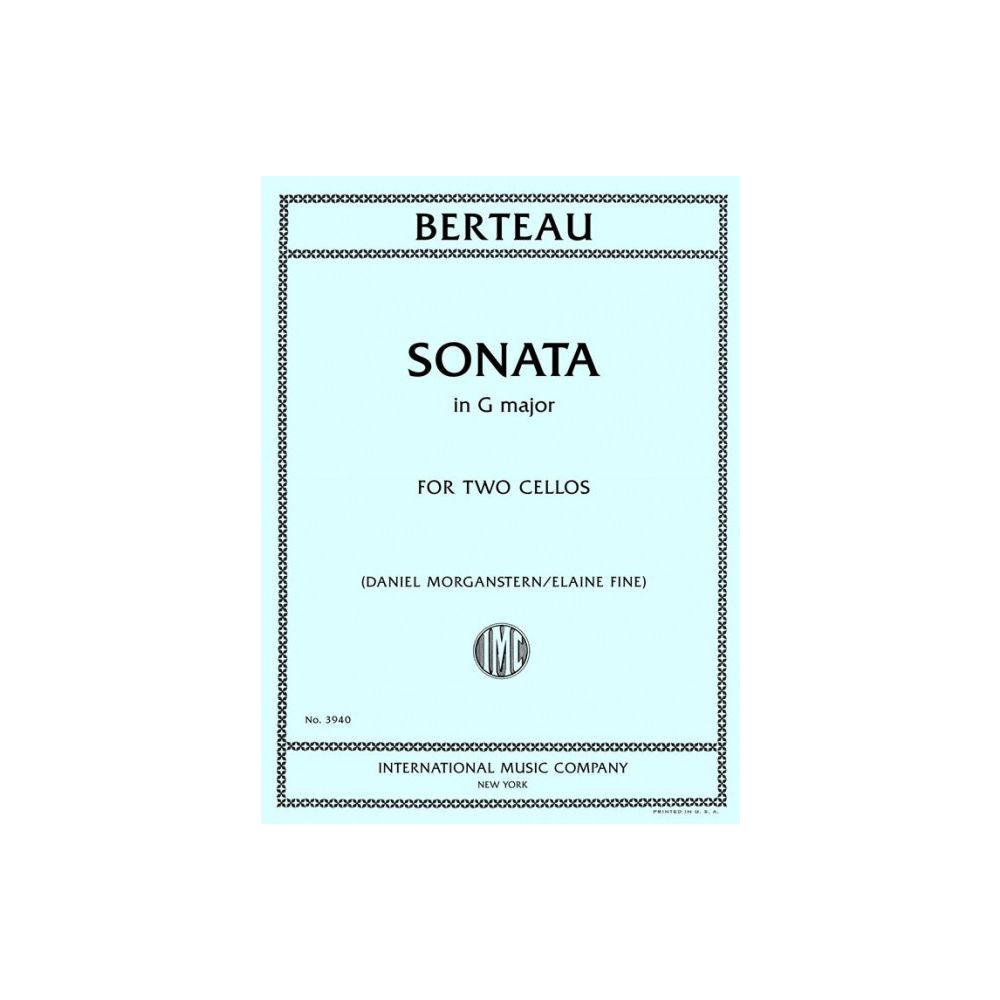
Par BERTEAU MARTIN. Long misattributed to Giovanni Sammartini, this delightful s...(+)
Par BERTEAU MARTIN. Long misattributed to Giovanni Sammartini, this delightful sonata is newly edited for two cellos. Contents: Allegro, Grave, Allegro. Two parts. / Date parution : 2025-01-21/ Répertoire / 2 Violoncelles
Improvisation - Musicianship - Techniques. Par O'NEILL JOHN. Since it was first ...(+)
Improvisation - Musicianship - Techniques. Par O'NEILL JOHN. Since it was first published in 1992, The Jazz Method for Saxophone has guided thousands of beginners of all ages from producing their first note on the saxophone to the performance of full-blown jazz pieces, including pieces by contemporary composers.
Based on the tried and tested format of the original method (with step-by-step guidance and a number of pieces specially written for this series), the revised edition is packed with updated content. It also comes complete with exciting new tunes, a re-recorded audio CD and over 2 hours of demo tracks available as free MP3 downloads. Now there is also a greater emphasis on the development of improvisational and listening skills. Thanks to additional suggestions for listening and reading as well as an appendix with all chord sequences for the 'live' accompaniment of the melodies, the 'Jazz Methods' are ideal for both pupils studying by themselves and for pupils learning with a teacher.
'...a rare opportunity for a new player (or a more experienced one) to develop a really musical facility. A rare addition to the jazz improvising library.' (Lee Konitz, international jazz saxophone soloist)
'John O'Neill has a solid understanding of jazz and how it can be taught. I highly recommend his educational jazz materials.' (Jamey Aebersold)
'...a rare opportunity for a new player (or a more experienced one) to develop a really musical facility. A rare addition to the jazz improvising library.' (Lee Konitz, international jazz saxophone soloist) / Pédagogie / Méthode / Saxophone Ténor
This flexible collection offers a wealth of excellent material for singing in ro...(+)
This flexible collection offers a wealth of excellent material for singing in rounds. All of the standard rounds are represented, including many by master composers as well as anonymous ones. The book is divided into three main sections: rounds with texts, rounds without texts and selected rounds in score format. In addition to a complete alphabetical index, there are separate listings of rounds with sacred texts, rounds with secular texts, rounds about animals, rounds about bells, Christmas rounds, rounds in foreign languages, lullabies, rounds about music, rounds about nature, rounds about singing and street cries. There's even an additional listing of rounds in two parts, three parts, four, five and six parts. This is one collection no music library should be without! From the Kodály Choral Concept. Includes index based on song content and teaching concepts. / Choeur Mixte
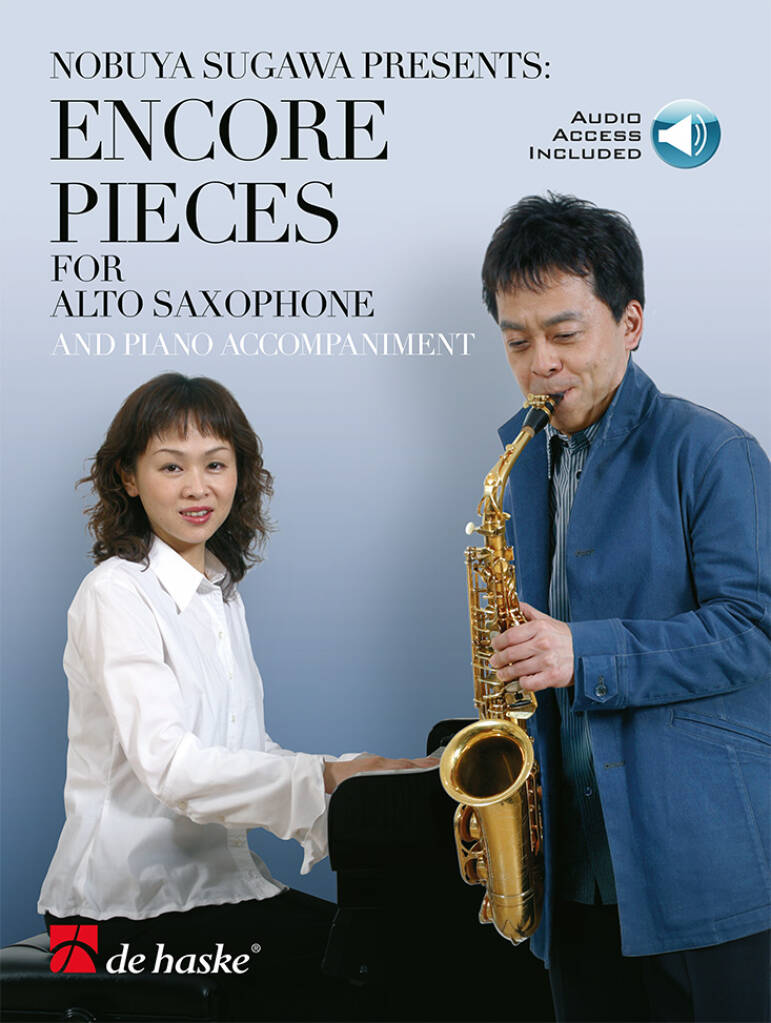
Encore Pieces Alto Saxophone and Piano De Haske International
for Saxophone. Par . It is often the case that at the end of a concert a soloist...(+)
for Saxophone. Par . It is often the case that at the end of a concert a soloist is requested to perform an additional item not listed in the programme, in other words an encore. In general the piece that is chosen is short and emphasises the expressive qualities of the instrument as well as the musical ability of the soloist. In this collection you will find a series of works that are suitable as encore pieces due to their duration and technical content. On the MP3 audio tracks available online you will find a complete recording of each piece which you can use as a guide before performing the solo part with the piano accompaniment. / Date parution : 2024-01-06/ Recueil / Saxophone Alto et Piano
The Sondheim For Singers series is the most comprehensive multi-volume collectio...(+)
The Sondheim For Singers series is the most comprehensive multi-volume collection of Sondheim songs ever published.Each volume has a different contents list and includes songs in original keys, as well as appropriate transpositions. An extensive introductory section, featuring plot synopses and comments from Sondheim about his music and shows, is also included.This volume is for Soprano singers and contains 43 songs, including Send In The Clowns, The Two Of You, Do I Hear A Waltz? and Anyone Can Whistle. / Soprano Et Piano
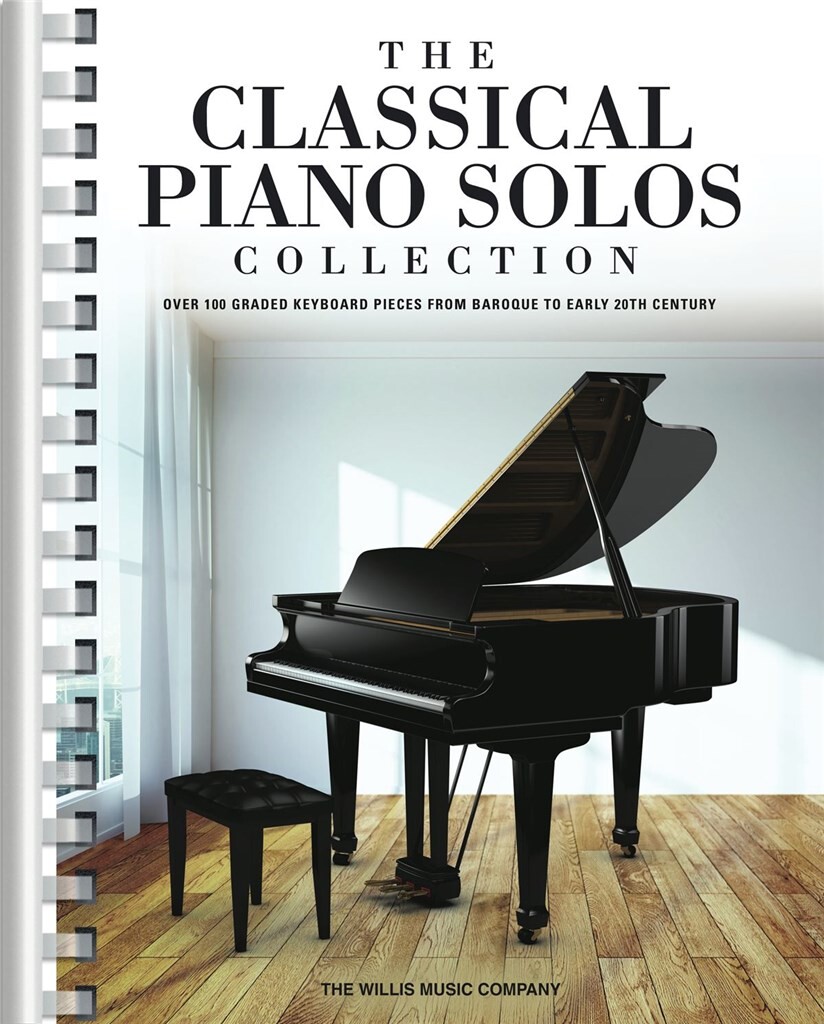
106 Graded Pieces From Baroque To The 20Th Century. A treasure trove of thoughtf...(+)
106 Graded Pieces From Baroque To The 20Th Century. A treasure trove of thoughtfully graded piano pieces from the four traditional classical eras, ranging from Bartók and Turk's most accessible teaching pieces to recital hall repertoire by Rachmaninoff, Bach, and Debussy. Carefully edited so an adult or mature student can progress easily by level, and ideal as a reference tool for piano teachers. Includes style characteristics and easy-to-use table of contents and indexes, and the collection is beautifully comb-bound so pages always stay open! Grading/level is similar to the John Thompson Modern Course for the Piano so progress is quick and assured,/ Recueil / Piano
Symphonies. Par RAMEAU JEAN-PHILIPPE. The heroic pastoral Daphnis et Eglé was p...(+)
Symphonies. Par RAMEAU JEAN-PHILIPPE. The heroic pastoral Daphnis et Eglé was performed only once, on 29 October 1753, for the entertainment of King Louis XV at Fontainebleau and remained unpublished until today. Our complete edition (BA 8862) is based on Rameau's autograph manuscript, a copy of the separate parts, and the libretto published by Ballard in 1753. A comparison of the sources reveals two versions of the work: the original version and the one revised for Fontainebleau, whereby the differences lie mainly in the final divertissement. This edition recommends the Fontainebleau version—which is actually more complete in its musical form, in particular with its overture and two ariettas—but alsoreconstructs the original state of the final divertissement (presented in the appendix) before it was revised. Here we present the instrumental numbers from both operas for concert performance. Based on the first scholarly-critical edition, published as part of “Opera Omnia Rameau Instrumental numbers in order of performance, but also grouped by key in the list of contents, enabling them to be combined freely into orchestral suites Published with performance material on hire/ Répertoire / Orchestre
All the preludes and études including many perfectly spun miniatures. Edited by...(+)
All the preludes and études including many perfectly spun miniatures. Edited by K. N. Igumnov and Y. I. Mil'shteyn. Content : PRELUDES Op. 2, No. 2 in B Major For the Left Hand, Op. 9, No. 1 in C Sharp Minor 24 PRELUDES, OP. 11 Part I No. 1 in C Major No. 2 in A Minor No. 3 in G Major No. 4 in E Minor No. 5 in D Major No. 6 in B Minor Part II No. 7 in A Major No. 8 in F Sharp Minor No. 9 in E Major No. 10 in C Sharp Minor No. 11 in B Major No. 12 in G Sharp Minor Part III No. 13 in G Flat Major No. 14 in E Flat Minor No. 15 in D Flat Major No. 16 in B Flat Minor No. 17 in A Flat Major No. 18 in F Minor Part IV No. 19 in E Flat Major No. 20 in C Minor No. 21 In B Flat Major No. 22 in G Minor No. 23 in F Major No. 24 in D Minor SIX PRELUDES, OP. 13 No. 1 in C Major No. 2 in A Minor No. 3 in G Major No. 4 in E Minor No. 5 in D Major No. 6 in B Minor FIVE PRELUDES, OP. 15 No. 1 in A Major No. 2 in F Sharp Minor No. 3 in E Major No. 4 in E Major No. 5 in C Sharp Minor FIVE PRELUDES, OP. 16 No. 1 in B Major No. 2 in G Sharp Minor No. 3 in G Flat Major No. 4 in E Flat Minor No. 5 in F Sharp Major SEVEN PRELUDES, OP. 17 No. 1 in D Minor No. 2 in E Flat Major No. 3 in D Flat Major No. 4 in B Flat Minor No. 5 in F Minor No. 6 in B Flat Major No. 7 in G Minor FOUR PRELUDES, OP. 22 No. 1 in G Sharp Minor No. 2 in C Sharp Minor No. 3 in B Major No. 4 in B Minor TWO PRELUDES, OP. 27 No. 1 in G Minor No. 2 in B Major FOUR PRELUDES, OP. 31 No. 1 in D Flat Major/C Major No. 2 in F Sharp Minor No. 3 in E Flat Minor No. 4 in C Major FOUR PRELUDES, OP. 33 No. 1 in E Major No. 2 in F Sharp Minor No. 3 in C Major No. 4 in A Flat THREE PRELUDES, OP. 35 No. 1 in D Flat Major No. 2 in B Flat Major No. 3 in C Major FOUR PRELUDES, OP. 37 No. 1 in B Flat Minor No. 2 in F Sharp Major No. 3 in B Major No. 4 in G Minor FOUR PRELUDES, OP. 39 No. 1 in F Sharp Major No. 2 in D Major No. 3 in G Major No. 4 in a Flat Major Op. 45, No. 3 in E Flat Major FOUR PRELUDES, OP. 48 No. 1 in F Sharp Major No. 2 in C Major No. 3 in D Flat Major No. 4 in C Major Op. 49, No. 2 in F Major Op. 51, No. 2 in A Minor Op. 56, No. 1 in E Flat Major Op. 59, No. 2 TWO PRELUDES, OP. 67 No. 1 No. 2 FIVE PRELUDES, OP. 74 No. 1 No. 2 No. 3 No. 4 No. 5 ETUDES Op. 2, No. 1 in C Sharp Minor TWELVE ETUDES, OP. 8 Part 1 No. 1 in C Sharp Major No. 2 in F Sharp Minor No. 3 in B Minor No. 4 in B Major No. 5 in E Major No. 6 in A Major Part II No. 7 in B Flat Minor No. 8 in A Flat Major No. 9 in G Sharp Minor No. 10 in D Flat Major No. 11 in B Flat Minor No. 12 in D Sharp Minor EIGHT ETUDES, OP, 42 No. 1 in D Flat Major No. 2 in F Sharp Minor No. 3 in F Sharp Major No. 4 in F Sharp Major No. 5 in C Sharp Minor No. 6 in D Flat Major No. 7 in F Minor No. 8 in E Flat Major Op. 49, No. 1 in E Flat Major Op. 56, No. 4 THREE ETUDES, OP. 65 No. 1 No. 2 No. 3
These two collections (BA 9668, BA 9669) give young students and teachers a rich...(+)
These two collections (BA 9668, BA 9669) give young students and teachers a rich selection of recital pieces, either to complement the Sassmannshaus 'Early Start on the Violin? method or to play independently from it. As all the pieces are written entirely in first position, they can be used after just a few months of lessons.The piano part may be played by the teacher or an advanced student. As an alternative, the accompaniment can be played by a second violin.All the pieces are available in exemplary recordings on YouTube.From the contents of Volumes 1 and 2:Nursery rhymes, folksongs but also less well-known gems, as well as original pieces by the editors, all precisely tailored to meet the needs of young students.- New recital pieces for the tried and trusted Sassmannshaus violin method- All pieces written in first position- With a second violin part for duet performance- Available in freely accessible recordings on YouTubeKurt Sassmannshaus, the editor of a great many string editions in the Bärenreiter catalogue, continues the tradition founded by his father Egon Sassmannshaus in the 'Early Start? string methods. He developed these two new editions together with his wife Melissa Lusk and his son Christoph Sassmannshaus.Similar editions are in preparation for the cello. / Violon
These two collections (BA 9668, BA 9669) give young students and teachers a rich...(+)
These two collections (BA 9668, BA 9669) give young students and teachers a rich selection of recital pieces, either to complement the Sassmannshaus 'Early Start on the Violin? method or to play independently from it. As all the pieces are written entirely in first position, they can be used after just a few months of lessons.The piano part may be played by the teacher or an advanced student. As an alternative, the accompaniment can be played by a second violin.All the pieces are available in exemplary recordings on YouTube.From the contents of Volumes 1 and 2:Nursery rhymes, folksongs but also less well-known gems, as well as original pieces by the editors, all precisely tailored to meet the needs of young students.- New recital pieces for the tried and trusted Sassmannshaus violin method- All pieces written in first position- With a second violin part for duet performance- Available in freely accessible recordings on YouTubeKurt Sassmannshaus, the editor of a great many string editions in the Bärenreiter catalogue, continues the tradition founded by his father Egon Sassmannshaus in the 'Early Start? string methods. He developed these two new editions together with his wife Melissa Lusk and his son Christoph Sassmannshaus.Similar editions are in preparation for the cello. / Violon Et Piano
Par HAENDEL GEORG FRIEDRICH. In terms of layout and musical text, this scholarly...(+)
Par HAENDEL GEORG FRIEDRICH. In terms of layout and musical text, this scholarly-critical performing edition of George Frideric Handels Complete Organ Works is based on the complete edition volumes of the composers keyboard music edited by Terence Best as part of the HalleHandel Edition (HHA). The HHA Critical Commentary forms the basis of this edition, which however differs from the HHA volumes in two respects. Firstly, it gathers together, for the first time, all of Handel works for which it can be solidly argued that they were composedfor the organ. The centre piece is a set of twelve handwritten fugues deriving directly from his immediate surroundings and published here, for the first time, as a unified cycle. Secondly, our edition presents plausible alternative readings fromvarious sources in the main body of the music. In the HHA these readings, all of which definitely or presumably stem from the composer, are merely listed in the critical commentary. - A detailed Foreword contains a description of the sources, followed by comments on the individual works. In addition this edition includes contemporary organ dispositions and a Critical Commentary. - Scholarly-critical edition based on the Urtext of the Halle Handel Edition (HHA) - First single-volume edition of Handels organ works - Includes all variant readings from the sources which have previously only been available in the Critical Commentary of the HHA - Detailed Foreword (Ger/Eng) with short descriptions of each source and a Critical Commentary (Ger/Eng) - With contemporary organ dispositionsContents:Fuga I in C minor HWV 610Fuga II in G minor HWV 605Fuga III in B-flat major HWV 607Fuga IV in F minor HWV 433/2Fuga V in E minor HWV 429/1Fuga VI in G major HWV 606Fuga VII in D minor HWV 428/2Fuga VIII in A minor HWV 609Fuga IX in B minor HWV 608Fuga X in F-sharp minor HWV 431/3Fuga XI in F major HWV 427/4Fuga XII in F major HWV 611“Fuga in E major” HWV 612“O the pleasure of the plains” in G major HWV 474“Jesu meine Freude” in G minor HWV 480 A scholarly-critical performing edition of George Frideric Handel 's Complete Organ Works based on the Halle Handel Edition (HHA). First single-volume edition of Handel 's Organ works Includes all variant readings from the sources which have previously only been available in the Critical Commentary of the HHA Detailed Foreword (Ger/Eng) with short descriptions of each source and a Critical Commentary (Ger/Eng) With contemporary Organ dispositions In terms of layout and musical text, this Barenreiter edition is based on the complete volumes of the composer's Keyboard music edited by TerenceBest as part of the HHA. The Halle Handel Edition's Critical Commentary forms the basis of this edition, which however differs from the HHA volumes in two respects. Firstly, it gathers together, for the first time, all of Handel 's works for which it can be solidly argued that they were composed for the Organ. The centre piece is a set of twelve handwritten fugues deriving directly from the composer's immediate surroundings and published here, for the first time, as a unified cycle. Secondly, this Barenreiter edition presents plausible alternative readings from various sources in the main body of the music. In the HHA these readings, all of which definitely or presumably stem from the composer, are merely listed in the critical commentary. Contents: Fuga I in C minor HWV 610 Fuga II in G minor HWV 605 Fuga III in B-flat major HWV 607 Fuga IV in F minor HWV 433/2 Fuga V in E minor HWV 429/1 Fuga VI in G major HWV 606 Fuga VII in D minor HWV 428/2 Fuga VIII in A minor HWV 609 Fuga IX in B minor HWV 608 Fuga X in F-sharp minor HWV 431/3 Fuga XI in F major HWV 427/4 Fuga XII in F major HWV 611 Fuga in E major HWV 612 O the pleasure of the plains in G major HWV 474 Jesu meine Freude in G minor HWV 480/ Répertoire / Orgue