Camille Saint-Saëns (9 octobre 1835 à Paris - 16 décembre 1921 à Alger) était un compositeur français de l'époque romantique. Dès son enfance il se révèle être un virtuose : il donne son premier concert à onze ans et fait sensation avec un concerto de Wolfgang Amadeus Mozart. Il entre au Conservatoire à 13 ans. À l'âge de 18 ans, il est nommé organiste de l'église Saint-Merry, à Paris. Il acquiert très vite une très bonne réputation et suscite l'admiration de musiciens tels Hector Berlioz et Franz Liszt, qui le décrit comme le « premier organiste du monde ». À l'initiative de ce dernier, il créera son opéra Samson et Dalila à Weimar. Il commence alors sa carrière officielle, au cours de laquelle il abordera la plupart des grandes formes musicales, avec un classicisme que certains qualifieront, assez injustement, d'académique (surtout en France). Son oeuvre se révèle souvent remarquable, claire et d'une grande qualité d'écriture. Pianiste virtuose, il écrira près de 30 ?uvres pour piano dont cinq concertos pour cet instrument. (Rétracter)...(Lire la suite)
Cyprès et Lauriers, Op. 156, for Organ and Orchestra was written by Camille Saint-Saëns in 1919, two years before the composer's death. An unusual w...
Cyprès et Lauriers, Op. 156, for Organ and Orchestra was written by Camille Saint-Saëns in 1919, two years before the composer's death. An unusual work, it is a memorial for the casualties of World War I.
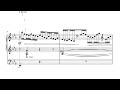
Lasting not quite twenty minutes, the entire piece is program music divided into two parts, each corresponding to a section of the title. The first (this) part, which corresponds to 'cyprès' (literally 'cypress') is a long, mournful adagio for organ solo in the manner of a dirge, reminiscent of the weeping that a cypress is often seen to embody.
One of Saint-Saëns' more (though by no means only) unusual compositions, this piece has not secured the same status in the classical canon as his more famous Third Symphony, written for similar ensemble thirty-one years earlier. This might be attributed to the fact that Cyprès et Lauriers is of a much shorter duration and markedly less profound and sweeping nature than its predecessor.
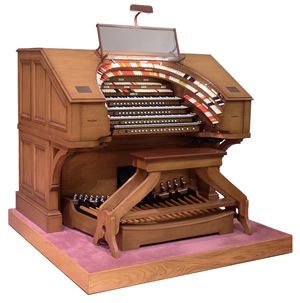
The instrumentation itself bears note: whereas the Third Symphony was written with the organ incorporated as a member of the orchestral ensemble, something that would bear repetition (most famously in Richard Strauss's Also sprach Zarathustra), Cyprès et Lauriers is structured in traditional concerto form with the organ as soloist.



 STUDIO
 SONO
SONO ACCESSOIRES
 CABLES
 EFFET
EFFET FLIGHTCASE & ETUIS
 LOGICIELS
 VIDEO
VIDEO LUMIERE
 DEEJAY
 MICROPHONE
 GUITARE
 CLAVIER
 PERCUSSION
 CUIVRE / VENT
 CORDES/TRAD.
 NOËL
NOËL